Your cart is empty


Total: 2839
/
2819

Learn how electromagnetic waves are generated and where we can encounter them.
What is the mysterious interaction that holds the components of a nucleus tightly together?
Let's see what happens when waves propagate from one medium to another.
Interference is one of the most spectacular wave phenomena.
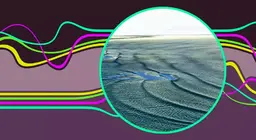
Learn about the importance of the diffraction of waves in our everyday life.
Almost every musical instrument works based on the phenomenon of standing waves. What should you know about these waves?

In quantum mechanics, regularity and uncertainty are present at the same time. How is that possible?

Let's see what experiments can prove the validity of quantum mechanics.
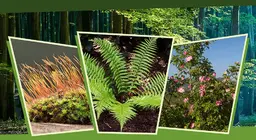
In this lesson, you can learn about the plants growing in the shrub, the herbaceous and the moss layer of deciduous forests.
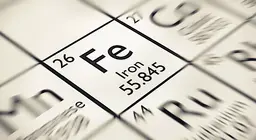
Why and how does the composition of atomic nuclei transform?

Tulips are popular ornamental plants. In this lesson, you can learn more about these beautiful plants.

Learn about the predominant art style of the 16th–18th centuries.
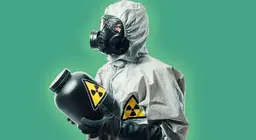
Where do humans encounter radioactive radiation and when do we need to protect ourselves from it?

Big cities feature a special flora and fauna adapted to the urban environment.
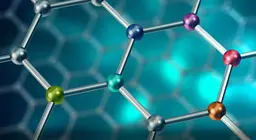
This lesson is about the lattice types of solid and crystalline materials.
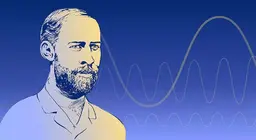
Radios, radars and mobile phones are based on Heinrich Hertz's work.
In this lesson, you can learn about herbaceous plants and perform experiments.
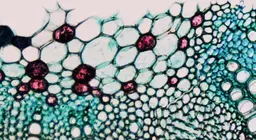
A lesson about the structure and characteristics of vascular plant tissues.
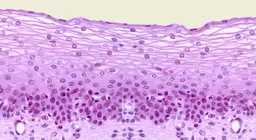
A lesson about the structure, role, significance and protection of human epithelium.
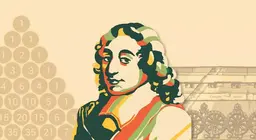
Pascal achieved significant results in mathematics, physics, philosophy, theology and literature.
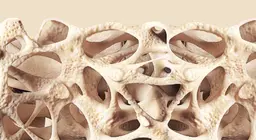
A lesson about the structure, types, role and protection of connective tissues.
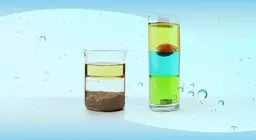
Learn about homogeneous, heterogeneous and colloidal systems.

In this lesson, you will learn about the formation and classification of carbohydrates.